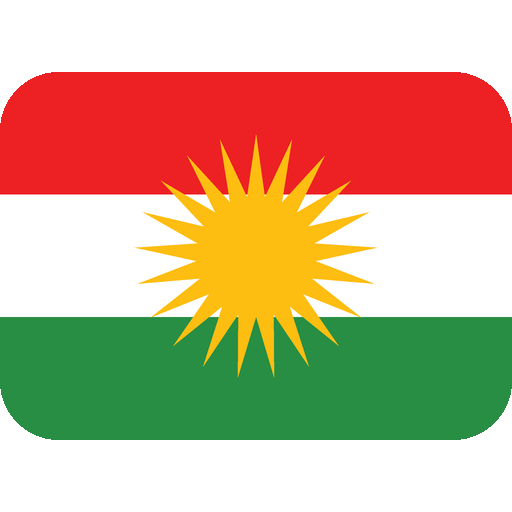
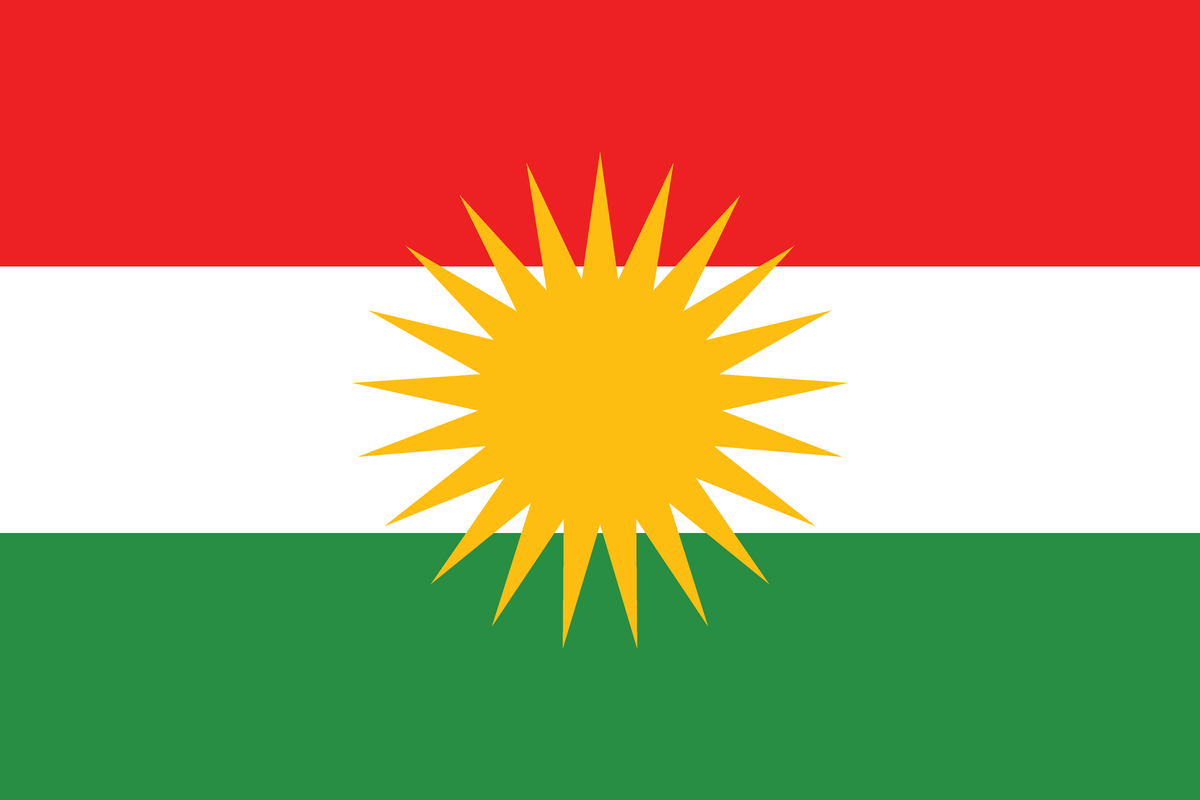
Why is there no Kurdistan flag emoji?
Flag emoji are not drawn by Apple or Google one by one. They are generated automatically from country codes in the ISO 3166-1 standard: two letters in, one flag out. Kurdistan has no ISO country code, so no keyboard in the world can offer its flag (source: Unicode Technical Standard #51, consulted 2026).
It gets harder. In March 2022 the Unicode Consortium, the organisation behind all emoji, decided to stop accepting proposals for new flag emoji altogether. Its own reasons: flags are the least used emoji category, and every added flag emphasizes the exclusion of others (source: Unicode blog, The Past and Future of Flag Emoji, 2022). The current submission guidelines repeat it: no more flags.
One exception remains. When a new nation is recognized by the United Nations, it receives an ISO code and its flag emoji is added automatically (source: the same Unicode decision, 2022). Read that again: the day Kurdistan is recognized, the emoji follows by itself. The emoji is not a design question. It is a recognition question.
The door is even ajar already. In March 2022 the International Organization for Standardization officially assigned the Kurdistan Region its own region code, the same type of code the flags of Scotland and Wales are built on (source: Rudaw, ISO recognition of the Kurdistan Region, 2022). Weeks later Unicode closed the door on new flags. The technical route exists; what is missing is the decision.
That there is room within the rules is shown by the flags that already exist: 🇽🇰 has a flag emoji through a temporary, user-assigned ISO code (source: Emojipedia, Flag: Kosovo, consulted 2026), and Scotland, Wales and England have their own subdivision flags 🏴 within the same standard (source: UTS #51). Where there is political will, a route exists.
The community has been asking for years, petition after petition, including one literally called #KurdistanEmoji (change.org, consulted 2026). Until Unicode moves, this page is the answer: the set ❤️☀️💚 works today, on every phone, in every app.
Want the full technical story, the device test and the code for developers? Read the Unicode proof page or follow the campaign.